
Written for Trans Day of Remembrance, November 20th 2026
by Paige Julianne Sullivan
paige@paigejulianne.com | https://paigejulianne.com/
Download Word Document | Download PDF
TDoR Remembrance List (offsite)
Licensing: Creative Commons Attribution-NonCommercial-ShareAlike 4.0 International
This covenant of use mandates that those who share this work provide proper attribution to the author. It permits the community to circulate, transform, and expand upon these reflections across any medium, provided such efforts remain strictly noncommercial. Should you choose to adapt or alter this sacred offering, the resulting work must be consecrated under these same identical terms of grace and openness. Non-commercial presentations/performances are granted under this license.
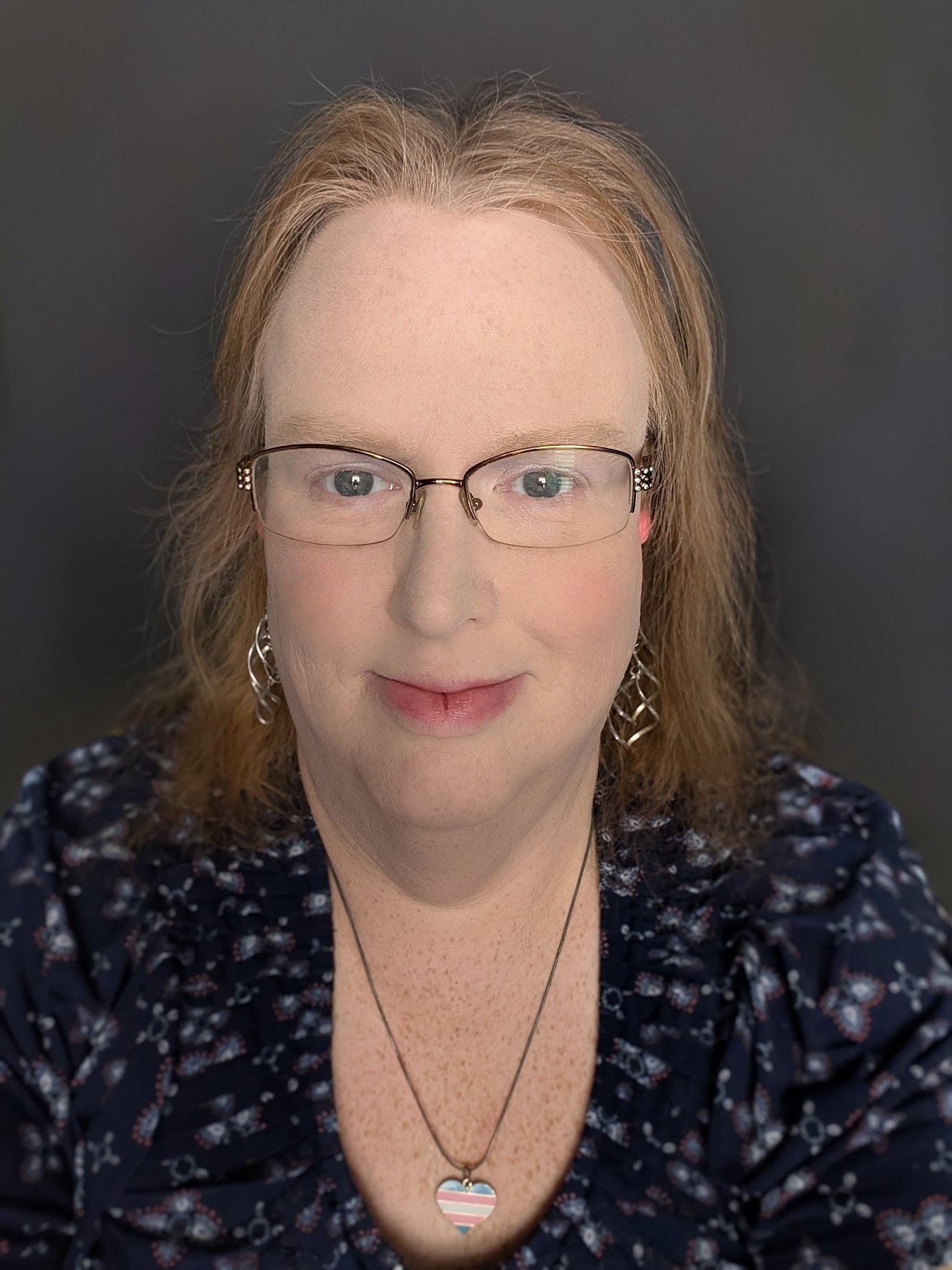
Author Bio: Paige Julianne Sullivan is a transgender software engineer, ELCA Lutheran, and longtime advocate for transgender rights in North Carolina. She writes at the intersection of faith, identity, and lived experience, exploring what scripture reveals about transgender people and dignity. Her blog can be found at https://paigejulianne.com/
[1] Beloved siblings in Christ, peace be with you.
[2] We gather tonight in a sanctuary of memory, a space carved out from the noise of the world to honor those whose voices were silenced by the shadows of hate. We are here because love demands we remember. We are here because justice requires we speak.
[3] Transgender kindred are no mere modern innovation. Throughout history, diverse gender expressions have been honored and integrated into the spiritual and social fabric of many ancient and indigenous cultures, even in remote island societies. This is not an abstract concept, but a globally documented reality. In Indigenous North American traditions, Two-Spirit individuals, such as the Navajo Nádleehí (naht-lee-hee) or Lakota Winkte (WEENK-tay), held revered roles as spiritual leaders, healers, teachers, and mediators long before colonization. In the Pacific, Samoan fa’afafine (fah-ah-fah-FEE-neh) have historically been, and continue to be, essential to their communities, caring for elders and frequently serving as deeply relied-upon leaders within their modern church denominations. Native Hawaiian culture honors the māhū (MAH-hoo), individuals of dual male and female spirit who were traditionally valued as healers, namers of children, and keepers of sacred genealogies and hula. Their profound healing legacy is forever etched into the Kapaemāhū (KAH-pah-ay-MAH-hoo) stones on Waikīkī Beach.
[4] Further south in Mexico, the Zapotec revere the muxe (MOO-shay), a third gender playing a socially-valued, indispensable role in preserving traditional culture, language, and providing care for their families. In South Asia, the hijra (hij-ruh) trace their sacred lineage back thousands of years through Hindu texts, traditionally holding the exclusive spiritual authority to bestow blessings of prosperity at weddings and births. And among the Bugis (BOO-gees) people of Indonesia, society recognizes five distinct genders, relying absolutely on the bissu (BEE-soo) —a gender-transcendent class of traditional priests—who possess the unique spiritual capacity to intercede with the divine. This enduring legacy serves as a testament that the diversity of human experience is a profound and ancient part of our global heritage.
[5] Every November 20th, we observe this holy day of mourning, a day etched into the collective soul of those who see their reflection in the names we honor tonight. To be transgender is to know the weight of a world that often refuses to see you.
[6] We know the statistics: the staggering violence, the pervasive systemic exclusion, and the specific, agonizing wounds that come from the house of faith. I know that for many, the hesitation to stand with our transgender siblings comes from a place of deep, sincere reverence for Scripture. You may ask, “What about Leviticus? What about Romans? Does the Bible not define gender as a rigid, binary gift from God?”
[7] Some read Genesis 1:27 as a fence, creating only two categories. But Hebrew poetry is not a fence; it is an opening. It uses merism—naming two poles to encompass the boundless whole, like “heavens and earth” or “day and night”. Just as “day and night” does not reject the existence of dawn and dusk, “male and female” does not reject the holy diversity God wove into the fabric of creation.
[8] And the sages who inherited that verse never read it as a fence either. Long before the modern world had any language for this conversation, the Mishnah and the Talmud were legislating for eight genders, not two. Alongside zachar (ZAH-khar), male, and nekevah (neh-keh-VAH), female, the rabbis named six more. The androgynos (an-DROG-ih-nos), who bears the characteristics of both, and of whom the Mishnah says—in a line I wish every church council had memorized—that they are in some ways like men, in some ways like women, in some ways like both, and in some ways like neither. The tumtum (TOOM-toom), whose sex is hidden or indeterminate; the word itself means covered. The saris hamah (sah-REES khah-MAH), one assigned male whose body was never going to follow that assignment—a eunuch, as the sages put it, from the day he first saw the sun. And the saris adam (sah-REES ah-DAHM), one made so by human hands. Their counterparts are the aylonit hamah (eye-loh-NEET khah-MAH), assigned female at birth but never developing as that assignment expected, and the aylonit adam (eye-loh-NEET ah-DAHM), changed by human intervention.
[9] These are not obscure marginalia. They appear hundreds of times across the Mishnah, the Talmud, and the later codes—in the law of marriage, of inheritance, of ritual obligation, of who may serve and who must be served. And notice what that hamah and adam distinction assumes: that a body can arrive one way and become another, whether by nature or by human hand, and that in either case the person remains a person under the covenant, with a place, a name, and obligations. The rabbis never asked whether such people existed. They knew they did. They asked how to make room. That is what a tradition does when it is being faithful.
[10] When we look at Leviticus 18:22 and 20:13, we are looking at the Holiness Code—a body of law designed to separate Israel’s cultic life from the surrounding nations. Scholar Saul Olyan has shown us that the Hebrew phrasing here is likely an idiom for specific cultic acts, not a universal moral condemnation of the person. And we must be honest: if we enforce these verses as absolute, eternal law, we must also stone the cattle ranchers who cross-breed their herds, picket Red Lobster for serving shellfish, and enforce the Jubilee debt cancellation every fifty years.
[11] Similarly, Deuteronomy 22:5—the prohibition against wearing the clothes of another gender—is often wielded as a blunt instrument. Yet, historical scholarship reveals this law was likely directed at specific, ritualistic cross-dressing in pagan cults of the ancient Near East, intended to maintain the distinct identity of Israel’s worship.
[12] In a modern context, gender-affirming clothing is not a pagan ritual; it is a tool of truth-telling. It is an act of alignment with the spirit God has placed within the vessel of the body.
[13] And then there is Deuteronomy 23:1, where the law explicitly excludes the eunuch from the assembly of the Lord. That is the fence. Now watch what Scripture does with it. Because Scripture spends the next several hundred pages walking straight through it, and putting the people it excluded at the center of the story.
[14] Jerusalem is falling. The prophet Jeremiah has been lowered into a muddy cistern and left to die, and not one member of the royal court says a word. The one who speaks is Ebed-Melech (EH-ved MEH-lekh) the Cushite—a Black African foreigner, and a saris, a eunuch of the king’s house. He goes out to the king at the Benjamin Gate and says plainly what everyone else is too frightened to say: these men have done evil, and this man will die. He is given a rescue party. And then comes the detail I cannot stop thinking about. On his way to the cistern, Ebed-Melech stops at the palace storehouse and gathers old rags and worn-out clothes. He lowers them into the pit ahead of the ropes and tells the prophet: put these under your arms, between your body and the rope. He has thought about the rope burn. In the entire collapse of a kingdom, the only person who stops to consider whether the rescue itself will hurt is a gender-variant Black foreigner serving in a hostile court.
[15] And God does not forget it. In Jeremiah 39, with the city about to burn, the word of the LORD arrives with a personal promise for exactly one named individual—and it is not a priest, a prince, or a prophet. Ebed-Melech will be spared. He will not be handed over to those he dreads. His life will be given to him, because he trusted God. The man who hauled the prophet out of the pit is himself hauled out of the fire.
[16] And then there is Esther, a book in which the survival of an entire people runs on the labor of eunuchs. It is Hegai (HEG-eye), the king’s saris, who receives Esther into the palace, who sees something in her, who makes certain she is fed and prepared and provided for, and who quietly advances her to the best place in the house. The other women, we are told, could ask for whatever they wished on the night their turn came—and most went in once and were never called for again. Esther asks for nothing except what Hegai advises. She wins a crown by trusting the counsel of a gender-variant elder who knew how to survive that palace. I will not gild him. Esther was taken into that house, not invited, and Hegai was kind to her inside a cruelty he administered. Both are true. The kindness still saved her life. When the decree of annihilation comes down, it is Hathach (HAH-takh), another of the king’s eunuchs, who carries the messages back and forth between Esther and Mordecai—the decree, the sum Haman promised, the terrible arithmetic of the golden sceptre and the thirty days. Everything Esther knows about the danger, she knows because a eunuch walked it across the courtyard to her. And when the whole plot turns, in the sleepless night when the king calls for the book of records, what is read aloud is the report of a conspiracy by two eunuchs of the threshold, exposed in time. Note that Scripture lets them be villains as well as saviors; that is its own kind of dignity. To be written as fully human is to be allowed to be complicated. But take the sarisim out of Esther and there is no Esther. There is no Purim. There is no deliverance.
[17] Let me be honest about what these texts are and are not. The rabbis were classifying bodies for legal purposes, not describing identities as we understand them today. The Hebrew saris covers real range—sometimes a castrated servant, sometimes simply a high official—and I will not press it further than it will bear. But in Esther the range narrows, because Hegai and Shaashgaz keep the harem, and that is precisely the post the ancient world reserved for men whose bodies had been altered. Most of them were made so by imperial violence rather than by self-understanding. I will not flatten the distance between their world and ours. But that distance is not the point. The point is that Scripture and tradition both knew perfectly well that human beings arrive in more than two configurations, and neither responded by pretending otherwise. They made room. And where the law did try to fence someone out, God overruled it—by name.
[18] Because God does not leave the eunuch outside the fence. In Isaiah 56:3–5, the prophet announces a stunning reversal: “Do not let the eunuch say, ‘I am just a dry tree.’ For thus says the LORD… I will give, in my house and within my walls, a monument and a name better than sons and daughters.” Hear what is being promised. To a person whose body was cut, God promises a name that shall never be cut off. To a person the law told to expect no descendants, and therefore no memory, God promises a memorial inside God’s own house—and better, God says. Better than sons and daughters. Not equal to. Better. God reverses God’s own exclusion.
[19] The Hebrew there for “a monument and a name” is yad vashem (yahd vah-SHEM). It is the name Israel gave to its memorial for the murdered, chosen precisely because it is God’s own promise to those whose line was severed and who have no one left to remember them. Beloved, that is what we are doing tonight. When we read these names aloud in this room, we are not performing a ritual of sorrow. We are keeping a promise God made in Isaiah 56 to the very people the law had shut out: you will have a name in my house, and it will not be cut off. This sanctuary is the yad vashem. We are the monument. Say the names.
[20] And when Jesus speaks of eunuchs in Matthew 19:12, listen to how he counts. There are those who were so from their mother’s womb. There are those who were made so by other people. And there are those who have made themselves so for the sake of the kingdom of heaven. Born so; made so by others; made so by one’s own hand. That is not a casual list. That is saris hamah, that is saris adam, and then a third category the sages had not named—the one who chooses. Our Lord used a taxonomy of gender wider than two, took the categories his own tradition already carried, made room in them for self-determination, and then said: let anyone accept this who can. He did not use a single one of them to condemn anybody.
[21] And in Acts 8:26–40, the Holy Spirit dispatches Philip to the wilderness road to meet a high-ranking Ethiopian court official—a foreigner, a person of color, and a eunuch. Notice what is in his hands: a scroll of Isaiah. He is reading the fifty-third chapter, about one who was humiliated, denied justice, and whose generation no one can describe. A few columns further along that same scroll is the fifty-sixth chapter, and his own promise is written in it. The Spirit sent Philip to a man who was one turn of the scroll away from hearing his own name. The eunuch asks the question that defines our faith: “Look, here is water! What is to prevent me from being baptized?” The answer is nothing. Philip baptizes them on the spot. The Spirit tore down the fence Deuteronomy had built, and the church’s first Gentile baptism was of a gender-non-conforming African foreigner.
[22] As St. Paul wrote in Galatians 3:28, “There is no longer male and female; for all of you are one in Christ Jesus.” When we encounter Romans 1:26-27, we must read it through the lens of first-century Rome, not twenty-first-century identity. Paul’s concern here is not the expression of a sincere gender identity or a loving, consensual relationship; rather, he is critiquing the exploitation and excess found within the context of ancient idolatry and Roman cultic patterns. He is speaking of people acting against their own established nature for the sake of lustful indulgence—a far cry from the courageous journey of transitioning toward one’s true self. To use this text to condemn transgender siblings is to ignore the cultural chasm between Paul’s world and our own.
[23] Finally, in 1 Corinthians 12, St. Paul reminds us that the Body of Christ is not a monolith. He emphasizes that the parts of the body that seem weaker or are treated with less honor are, in fact, “indispensable.” The ancient cultures of the world understood this deeply, recognizing that those who transcend the binary often possess a unique, elevated spiritual capacity to bridge human divides and heal their communities.
[24] When the church excludes transgender people, it is not simply a “disagreement” or a “policy choice”—it is a direct, self-inflicted injury to the Body of Christ itself. We are amputating our own members. Without the unique perspective, the hard-won wisdom, and the holy resilience of our trans siblings, the Body is incomplete, scarred, and unable to function as the full presence of Christ in the world.
[25] As Martin Luther taught, the “brilliant light” of the Gospel distinguishes the law from the promise. Christ Himself summarized the whole Law in two commandments: Love God, and love your neighbor as yourself. Any reading of Scripture that produces “bad fruit”—that drives our trans children to despair, homelessness, or early graves—is a misreading. We test every verse by the canon within the canon: the radical, sacrificial love of Christ.
[26] When we look at the names we lose each year, we are looking at the desecration of the divine. Every life lost was a unique expression of God’s creativity. Tonight, we mourn them with the ferocity they deserved in life. But we must do more than pray. Prayer without action is a silent bell. To truly honor the fallen, we must protect the living. We must flip the tables of discrimination just as Jesus flipped the tables in the temple—not with silent prayers, but with holy outrage and transformative action.
[27] This is the liturgy—the work of the people. It is the arduous task of “repairing the temple.” Repairing the temple means advocating for policy changes that protect the vulnerable, and standing as a bulwark for trans people of all ages who are being targeted by unprecedented legislative cruelty. In 2025, over 1,000 anti-transgender bills were considered nationwide, a record-breaking surge that has continued into 2026 with more than 800 bills introduced across 43 states, seeking to block basic healthcare, education, and legal recognition. Today, thousands of transgender youth live in states with laws actively restricting their access to gender-affirming care, sports, and public facilities. This legislation inflicts severe harm, adversely affecting not just transgender individuals, but their families and care providers. We must fearlessly confront this cruelty, alongside the systemic transphobia that has lived in our pews for too long.
[28] If we say we love God, whom we cannot see, while failing to protect our siblings whom we can see, we are not yet walking the path of the Cross. This is not a struggle for the transgender community to bear alone. Their allies, their siblings, need to stand in the gap.
[29] It demands a commitment to radical dignity, intervention against microaggressions, and a persistent defense of transgender humanity in every room you enter. Allies must take concrete, daily actions to ensure trans people can truly thrive, not merely survive. This means actively learning and respecting someone’s terminology and pronouns, and swiftly intervening when you witness harassment or misgendering. It means continuously educating yourself without expecting transgender people to bear the burden of explaining their existence. To foster a world where trans people flourish, allies must help create change in their workplaces and broader communities, advocating for inclusive policies, safe housing, and equitable healthcare. Remember that being an ally is a sustained and persistent pattern of action; we must back up our visibility with tangible work.
[30] And bring the rags. Ebed-Melech did not merely protest that the prophet was in the pit. He stopped at the storehouse first, because he knew what ropes do to a body. Allyship is the rags. It is the ride to the appointment. It is the correct name on the form without being asked twice. It is the spare room, the meal, the phone call at two in the morning, the small material tenderness that keeps the rescue from doing its own damage. Anyone can shout down into a pit. Go get the rags.
[31] We are Easter people, yet we cannot claim the resurrection while standing idle in the shadow of the tomb. The names we read tonight represent a systemic failure of our collective conscience. Mourning alone is a hollow ritual if it does not fuel a holy resistance. Our responsibility is not merely to witness this injustice, but to actively dismantle the structures of hatred that demand these sacrifices. We are called to a concrete mobilization of faith—to be the hands that physically roll away the stones of legislative cruelty and social exclusion.
[32] Let us leave this sanctuary not with passive sorrow, but with the urgent fire of the Spirit. Do not wait for the list of names to shorten on its own; go forth and force the world to be safer through your unrelenting advocacy and protective presence. We must occupy the spaces of power, confront the architects of discrimination, and build a world where the ferocity of our love makes hatred impossible. The time for silent prayer has passed; the hour for holy action is here. Let us live so that every trans child of God is not merely held in our hearts, but named in God’s own house and protected by our very lives.
[33] For we are all—each and every one of us—created Imago Dei (ih-MAH-goh day-ee). In the image of God.
[34] Amen.